- What Is VR Marketing?
- Why VR Marketing Matters for Modern Brands
- Common VR Marketing Use Cases
- Benefits of VR Marketing for Marketing Leaders
- Challenges and Limitations of VR Marketing
- VR Marketing Tools and Platforms to Know
- Best Practices for Implementing VR in Marketing
- Is VR Marketing Right for Your Organization?
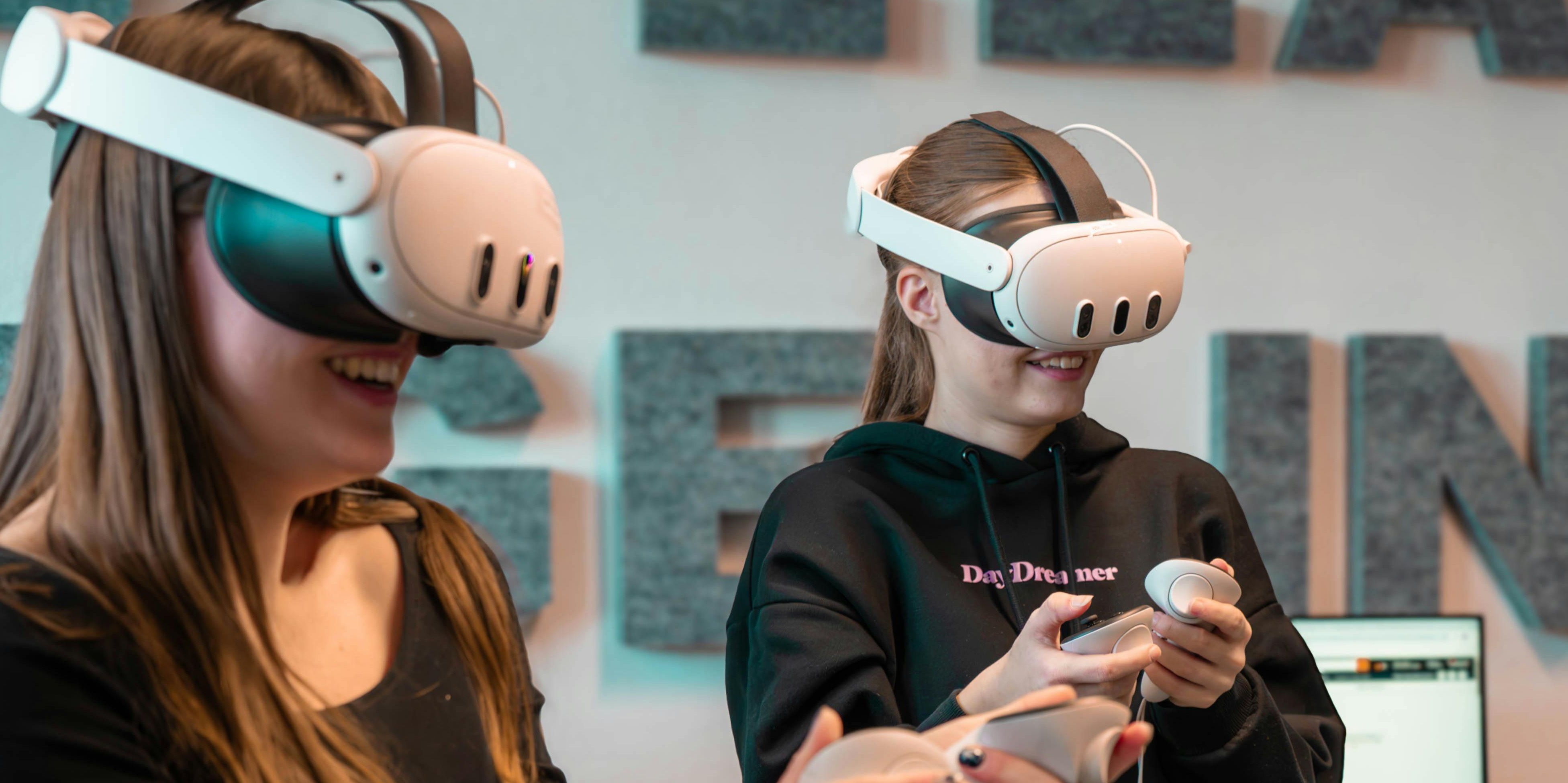
VR marketing is moving from experimental to strategic. As audiences become harder to engage through traditional digital channels, marketing leaders are turning to immersive technologies to create more memorable brand experiences. Virtual reality offers something most formats cannot: presence. Instead of watching or scrolling, customers step inside a brand’s story.
For marketing professionals and leaders, the question is no longer whether VR in marketing is possible. The real question is when it makes sense, how to measure it, and where it delivers the most value.
What Is VR Marketing?
VR marketing refers to the use of virtual reality technology to create immersive brand experiences. These experiences place users inside a fully digital environment that they can explore and interact with using a headset or browser-based VR tools.
Unlike video or interactive web content, VR surrounds the user. It controls visual context, spatial audio, and interaction flow. This makes VR marketing particularly effective for storytelling, education, and high-consideration products where understanding and emotion matter.
VR vs AR vs Mixed Reality in Marketing
Within AR VR marketing, the differences matter:
- VR creates a fully immersive digital environment. The real world is replaced.
- AR overlays digital elements onto the real world, often through a phone or tablet.
- Mixed reality blends both, allowing digital objects to interact with physical space.
VR is the most immersive option. It is best suited for controlled brand experiences, simulations, and storytelling where focus and emotional impact are priorities.
Why VR Marketing Matters for Modern Brands
VR in marketing addresses a growing challenge. Attention is fragmented, and digital fatigue is real. Immersive experiences cut through this noise by demanding active participation.
From a leadership perspective, VR marketing supports three strategic goals. It increases engagement, strengthens brand differentiation, and enables deeper understanding of complex products or ideas.
The Psychology Behind Immersive Marketing
VR works because of presence. When users feel like they are inside an experience, their brains respond differently. Memory retention improves. Emotional responses are stronger. Distractions decrease.
Studies consistently show that immersive experiences lead to higher recall than passive formats. For brands, this means fewer impressions can deliver more impact when the experience is well designed.
Common VR Marketing Use Cases
VR marketing is not limited to one industry or funnel stage. Its applications span awareness, consideration, and enablement.
Brand Experiences and Storytelling
Many brands use VR to tell stories that would be impossible in physical space. This includes virtual worlds, interactive narratives, and experiential campaigns that reflect brand values.
These experiences are often used for awareness and brand building. They work especially well for brands that want to create emotional connection rather than push immediate conversion.
Product Marketing and Demonstrations
VR excels when products are complex, expensive, or difficult to demonstrate physically. B2B solutions, industrial equipment, real estate, automotive, and travel brands all benefit here.
Instead of static demos or long sales decks, prospects can explore products in context. This improves understanding and shortens sales cycles.
Events, Trade Shows, and Experiential Campaigns
VR extends the reach of physical events. Brands use VR to offer virtual booth tours, immersive presentations, or digital twins of real-world experiences.
For marketing leaders, this supports hybrid event strategies and increases ROI on event spend by reaching audiences beyond the venue.
Benefits of VR Marketing for Marketing Leaders
VR marketing delivers value beyond novelty when it aligns with business objectives.
Higher Engagement and Time Spent
VR experiences typically generate longer dwell times than traditional content. Users are actively exploring, not passively consuming.
This depth of engagement is especially valuable for top-of-funnel and mid-funnel initiatives where education and differentiation matter.
Stronger Brand Recall and Emotional Impact
Because VR engages multiple senses, it creates stronger memory encoding. Users are more likely to remember the brand and associate it with the experience.
For leadership teams focused on long-term brand equity, this emotional impact is a key advantage.
Data and Behavioral Insights
Modern VR platforms capture detailed interaction data. This includes where users look, what they interact with, and how long they engage.
When integrated with marketing analytics, VR in marketing can reveal intent signals that traditional content cannot.
Challenges and Limitations of VR Marketing
VR marketing is powerful, but it is not frictionless. Leaders should approach it with a realistic understanding of constraints.
Cost, Complexity, and Accessibility
High-quality VR experiences require investment. Production costs, 3D design, and technical expertise can be significant.
Audience accessibility is another factor. While headset adoption is growing, not all audiences have access or willingness to use VR hardware. Web-based VR can help, but it may limit immersion.
Measurement and ROI Concerns
Attribution remains a challenge. VR does not always fit neatly into existing analytics models.
Marketing teams need to define success metrics early. These may include engagement time, completion rates, or downstream influence rather than direct conversion.
VR Marketing Tools and Platforms to Know
Rather than evaluating VR marketing through individual vendors alone, marketing leaders should understand the platform categories that support immersive campaigns at scale. Most VR in marketing initiatives rely on a combination of experience creation tools and analytics platforms, each serving a distinct role in execution and measurement.
VR Experience Creation Platforms
VR experience creation platforms allow marketing teams to design, publish, and manage immersive content without building everything from scratch. These tools typically provide visual editors, reusable templates, 3D asset support, and multi-device publishing options, which lowers the barrier to entry for non-technical teams.
Several platforms in this category are actively reviewed on G2 and are commonly used for marketing, training, and experiential campaigns:
Unity and Unreal Engine are frequently used for highly customized VR brand experiences. They offer maximum creative control and realism, but require technical expertise and longer development cycles.
Uptale and Strivr focus on immersive experiences that can be created and deployed more quickly, especially for branded learning, product education, and guided experiences.
Matterport is widely used for virtual tours and spatial experiences, particularly in real estate, retail, and travel marketing.
Pano2VR and similar tools support 360-degree VR experiences that are easier to produce and distribute through web-based environments.
Vectary enables browser-based 3D and VR content creation, making it easier for marketing teams to collaborate without heavy software requirements.
This category is best for organizations that want to scale VR content creation internally and reduce reliance on custom development agencies. A common watchout is customization depth. Template-driven platforms can accelerate production but may limit advanced interactivity or highly branded environments compared to bespoke builds.
Analytics and Performance Tracking Tools
Analytics is one of the most overlooked areas of VR marketing. Traditional digital metrics such as clicks and page views do not translate well to immersive environments. VR analytics platforms focus instead on behavioral and spatial data.
Tools and platforms in this space, many of which are also visible on G2, typically track:
- User movement and navigation paths
- Gaze direction and attention hotspots
- Interaction frequency and completion rates
- Time spent within specific scenes or objects
Some VR platforms, such as Strivr and Uptale, include built-in analytics tailored specifically to immersive experiences. Others integrate VR interaction data with broader analytics stacks, including CRM or marketing automation platforms.
These tools are best for teams that need deep insight into experience performance, particularly for high-investment campaigns or sales enablement use cases. One key watchout is alignment. VR metrics must be mapped back to broader marketing KPIs such as brand lift, pipeline influence, or learning outcomes, or they risk becoming siloed data points with limited strategic value.
Best Practices for Implementing VR in Marketing
Execution quality determines whether VR delivers value or becomes a costly experiment.
Start With Pilot Campaigns: Marketing leaders should begin with focused pilots tied to clear goals. This reduces risk and builds internal confidence. Successful pilots provide data that supports broader investment decisions.
Design for Comfort and Simplicity: User experience matters. Poor navigation or motion discomfort can undermine even the strongest concept.
Effective VR marketing prioritizes intuitive design, short sessions, and clear guidance.
Is VR Marketing Right for Your Organization?
VR marketing is not a universal solution. It is a strategic tool that works best when immersion solves a real marketing problem.
For marketing professionals and leaders, the opportunity lies in using VR thoughtfully. When aligned with goals, audience needs, and measurement frameworks, VR can deliver engagement and insight that traditional channels struggle to match.