- What Is 5G for Manufacturing
- Why 5G Matters in the Manufacturing Industry
- Core Use Cases of 5G in Manufacturing
- Key Challenges When Deploying 5G in Manufacturing
- Evaluation Criteria for 5G Manufacturing Solutions
- Best 5G Advanced Solutions From Telecom Manufacturers
- How Manufacturing Leaders Should Approach 5G Adoption
- The Future of 5G in Manufacturing
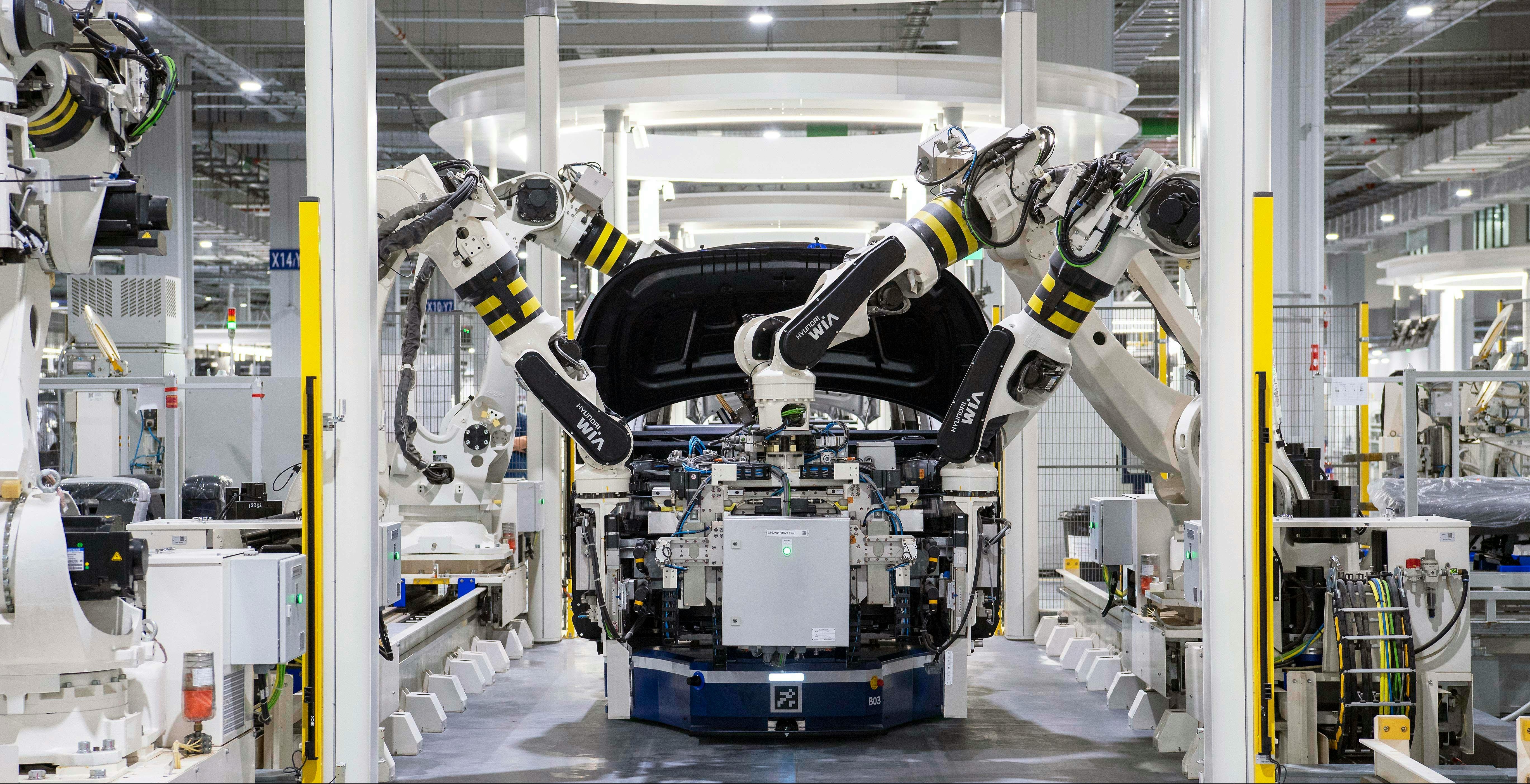
Manufacturers are under pressure to increase output, reduce downtime, and respond faster to changing demand. Traditional networks were not designed for the volume of connected devices, real-time data, and automation now required on the factory floor. This is where 5G for manufacturing is emerging as a critical enabler. More than a faster wireless standard, 5G is becoming the connectivity layer that supports smart factories, autonomous systems, and data-driven operations across the manufacturing industry.
As adoption grows, manufacturing leaders are evaluating how 5G fits into their broader digital transformation strategies. Understanding what 5G enables, where it delivers the most value, and which telecom manufacturers offer the most advanced solutions is essential for making informed investment decisions.
What Is 5G for Manufacturing
5G for manufacturing refers to the use of fifth-generation wireless networks to support industrial operations. This often includes private 5G networks deployed within factories, warehouses, and industrial campuses. These networks are designed to deliver reliable, low-latency, and secure connectivity for machines, sensors, robots, and workers.
Unlike consumer-focused 5G, industrial 5G prioritizes deterministic performance and operational reliability. It is commonly paired with edge computing, industrial IoT platforms, and automation systems to enable real-time control and analytics.
Key 5G Capabilities Relevant to Manufacturers
Several core capabilities make 5G especially suited to manufacturing environments. Ultra-low latency supports time-sensitive applications such as robotics and motion control. High device density allows thousands of sensors and machines to operate simultaneously without network congestion. Network slicing enables manufacturers to dedicate bandwidth to critical applications, ensuring consistent performance even during peak usage.
Why 5G Matters in the Manufacturing Industry
The manufacturing industry is becoming increasingly software-defined. Machines generate continuous data, production lines are reconfigured more frequently, and labor shortages are driving automation. 5G supports this shift by providing a flexible, wireless alternative to fixed infrastructure.
For manufacturers, the value of 5G lies in improved agility and resilience. Production layouts can change without rewiring. Equipment can be monitored in real time. New digital tools can be deployed faster across sites.
5G vs Wi-Fi and Legacy Industrial Networks
Wi-Fi remains common on factory floors, but it was not built for mission-critical control. Performance can degrade in dense or interference-heavy environments. Legacy industrial wireless systems often lack scalability and vendor flexibility.
5G offers stronger security, predictable performance, and carrier-grade reliability. Private 5G networks also give manufacturers greater control over data and quality of service, which is essential for sensitive industrial workloads.
Core Use Cases of 5G in Manufacturing
5G in manufacturing supports a wide range of operational and strategic use cases. Most organizations begin with targeted applications before scaling more broadly.
Smart Factories and Connected Equipment
Smart factories rely on continuous data flows between machines, systems, and analytics platforms. 5G enables pervasive connectivity for sensors, controllers, and production assets, even in large or complex facilities. This creates a real-time view of operations and supports faster decision-making.
Robotics and Autonomous Systems
Collaborative robots, autonomous guided vehicles, and mobile robots require reliable, low-latency communication to operate safely and efficiently. 5G enables centralized control and coordination without the constraints of wired connections, supporting more flexible automation strategies.
Predictive Maintenance and Real-Time Monitoring
With 5G, manufacturers can stream equipment data continuously rather than relying on periodic sampling. This improves the accuracy of predictive maintenance models and helps maintenance teams address issues before failures occur, reducing unplanned downtime.
Augmented Reality and Remote Operations
Augmented reality applications for training, maintenance, and inspections depend on high bandwidth and low latency. 5G supports immersive AR experiences and enables remote experts to assist frontline workers in real time, which is especially valuable in distributed operations.
Key Challenges When Deploying 5G in Manufacturing
Despite its benefits, deploying 5G in manufacturing is not without challenges. Manufacturing leaders must address technical, organizational, and financial considerations.
Infrastructure and Spectrum Considerations
Private 5G networks require investment in radios, core network components, and spectrum access. Spectrum availability varies by region, and manufacturers must decide whether to work with telecom operators or deploy fully private networks.
Security and Data Governance
While 5G offers strong security features, it also expands the attack surface by connecting more devices. Manufacturers need clear policies for data ownership, access control, and integration with existing security frameworks.
Integration With Existing OT and IT Systems
5G does not replace existing operational technology overnight. Integrating new networks with legacy PLCs, SCADA systems, and enterprise IT platforms requires careful planning and experienced partners.
Evaluation Criteria for 5G Manufacturing Solutions
When assessing advanced 5G solutions from telecom manufacturers, decision-makers should use a structured evaluation framework.
Network Performance and Reliability: Manufacturing applications demand consistent latency, high availability, and predictable performance. Service-level guarantees and proven industrial deployments are critical indicators.
Scalability and Future Readiness: 5G investments should support future expansion. This includes the ability to add devices, applications, and sites without major redesign, as well as clear upgrade paths for evolving standards.
Ecosystem and Partner Support: No 5G deployment stands alone. Manufacturers should evaluate device compatibility, integration with industrial software, and the availability of system integrators and managed services.
Best 5G Advanced Solutions From Telecom Manufacturers
Several telecom manufacturers have developed 5G solutions tailored to industrial environments. These offerings vary in focus, maturity, and integration depth.
Ericsson 5G Solutions for Manufacturing
Ericsson provides private 5G networks designed for industrial use cases, with a strong emphasis on reliability and performance. Its solutions are used in manufacturing, logistics, and heavy industry.
Key Features
Ericsson offers end-to-end private 5G infrastructure, support for edge computing, and integration with industrial automation platforms. The company has extensive experience operating large-scale networks, which translates into robust industrial deployments.
This solution is best for large manufacturers with complex, multi-site operations that require high availability and standardized network architectures. A potential downside is higher upfront investment, which may be challenging for smaller facilities or early-stage pilots.
Nokia 5G for Industrial Manufacturing
Nokia has positioned itself as a leader in industrial-grade private wireless networks. Its 5G solutions are designed for mission-critical applications and harsh industrial environments.
Key Features
Nokia focuses on deterministic performance, strong security, and tight integration with industrial IoT platforms. Its portfolio includes private wireless, edge computing, and industrial analytics capabilities.
Nokia’s approach is best for manufacturers running safety-critical or latency-sensitive applications, such as autonomous vehicles or process automation. One consideration is that successful deployments often require experienced partners or internal expertise to manage complexity.
Siemens and Telecom-Integrated 5G Solutions
Siemens approaches 5G from an automation-first perspective, integrating wireless connectivity with its industrial software and hardware portfolio.
Key Features
Siemens offers industrial 5G components that integrate closely with factory automation systems, industrial edge platforms, and digital twin technologies. This supports seamless OT and IT convergence.
These solutions are best for manufacturers already standardized on Siemens automation and control systems. A limitation is reduced flexibility for organizations with highly heterogeneous automation environments.
How Manufacturing Leaders Should Approach 5G Adoption
Successful 5G adoption requires more than technology selection. Leadership alignment and clear priorities are essential.
Start With High-Impact Use Cases
Manufacturers should begin with use cases that deliver measurable value, such as predictive maintenance or mobile robotics. Early wins help build internal support and justify broader rollout.
Build Cross-Functional Ownership
5G sits at the intersection of IT, OT, and operations. Cross-functional teams ensure that network decisions align with production goals, security requirements, and long-term architecture.
The Future of 5G in Manufacturing
5G for manufacturing is moving from experimentation to operational reality. As networks mature and ecosystems expand, 5G will increasingly underpin smart factories and connected supply chains.
For manufacturing leaders, the opportunity lies in treating 5G as a strategic platform rather than a standalone upgrade. Those who align connectivity investments with business outcomes will be best positioned to compete in an increasingly digital manufacturing industry.